
Ted Lasso Season 4: An optimistic but over-stuffed return

Review Overview
Cast
8Comedy
6Cliches
3David Farnor | On 05, Aug 2026
Season 4 premieres on 5th August 2026, with episodes arriving weekly.
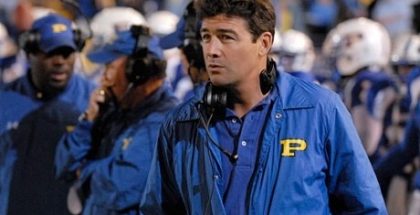
Believe. That’s the word that kept Ted Lasso going for three seasons on Apple TV. The football comedy charmed fans from its first game with the relentless optimism of its eponymous coach, played by Jason Sudeikis, who came from the USA to manage men’s football team AFC Richmond. Initially hired as a ploy to sabotage the club, it was all too fitting to see his underdog overcome impossible odds through sheer compassion and kindness. Season 2 duly followed, seasoning that emphasis on positive attitude and consideration with a darker, more vulnerable exploration of mental health. Season 3 continued to build and delve deeper into its players’ lives and complications – and wound up becoming bloated, overindulgent and disappointingly uneven. It was mostly thanks to the cast’s endearing charisma, chemistry and sincerity that the show wrapped up amiably, with more than a little relief. Believe? That’s a big ask for Season 4, which returns three years later, without anyone really asking for it.
Season 4 is a bit of a reboot, as well as a sequel, as it sees club owner Rebecca (Hannah Waddingham), business chief Higgins (Jeremy Swift) and marketing guru Keeley (Juno Temple) fly over to his hometown of Kansas City to recruit him to manage Richmond’s new women’s football team. Spoiler alert: he says yes, and so we get the main gang back together, along with Brett Goldstein’s Roy Kent, who is managing the men’s team, and Beard as Ted’s loyal assistant coach (Brendan Hunt). And, while there’s fun in seeing the ensemble reunite – and their off-screen joy is so evident that they’re barely acting at this point – that proves to be Season 4’s biggest challenge: it feels a lot like more of the same, rather than a new chapter or, crucially, a new challenge.
And so the stage is set for another round of Roy and Keeley’s on-off stakes, plus a lot of screen time for Beard, whose emotional collapse without Ted is admittedly funny but gets in the way of the plot moving forward. Goldstein’s Kent is one of the finest comedy creations in recent years – his gruff masculinity concealing the fact that he’s the most emotionally healthy and honest individual you could hope to meet – but his and Keeley’s romantic arc has no new ground to cover and he simply doesn’t need to be more than a fan-pleasing cameo. Chuck in some on-the-nose japes for Higgins and Rebecca, including some cliched musings on feminism, and it’s perhaps no surprise that the over-stuffed scripts suffer from Season 3’s biggest flaw: they all stretch on closer to an hour than a tight 30 minutes.
That, unfortunately, is most apparent in the season’s unnecessary opening episode, which slowly lines up the ball for Ted to kick the action back to Britain – a whole segment involving him working in his local supermarket, while trying to be present for his son, strangely drags when it should be uplifting to see him living his once-treasured dreams of family life. With underwhelming running jokes about baseball and BBQ sauce, it all feels ironically very American.
Once play does shift to home turf, however, the comedy unveils its big new transfer: Tanya Reynolds, one of Sex Education’s deserving breakout stars, as Alice Chilton, the coach who has been effectively keeping Ted’s seat warm for him. Reynolds is immediately the best striker on the pitch, delivering a deadpan with a slightly sour twitch that proves a perfect foil for Lasso’s moustached smile. She’s smart, precise and – underneath her bristling persona – clearly cares for her players. All of which makes you wonder why Ted doesn’t immediately step off the pitch and let her lead the season. Because with a new starting line-up, Ted Lasso’s fourth outing could have been a spin-off with something new to say and explore, rather than a replay of Ted’s greatest past goals. The new players, from a goalie who refuses to wear gloves to two bickering siblings, are undeveloped in the opening episodes but have potential to become a loveable community in the same way that AFC Richmond’s original group did – only, however, if they get the time and opportunity to make that happen.
The result is glossy and well-acted, but feels oddly mainstream; the show’s heart-on-its-sleeve earnestness and scrappy determination to cling to hope here come across as more like pleased-with-itself confidence and corporate nostalgia. Whenever Chilton and the women’s team are on the pitch, there’s enough humour on display to make you hope that Ted Lasso might deliver on its return – but you wish it had the excitement of a World Cup final penalty shootout, rather than a third-place play-off in extra time. Believe?
Related Posts
Apple to launch ITunes on Samsung Smart TVs this spring... January 8, 2019 | VOD News

Sofia Coppola and Bill Murray reunite for Apple and A24’s On the Rocks... January 16, 2019 | VOD News

Music video streams to be included in official UK chart... June 25, 2018 | VOD News
Jason Katims inks overall deal with Apple... January 22, 2019 | VOD News